

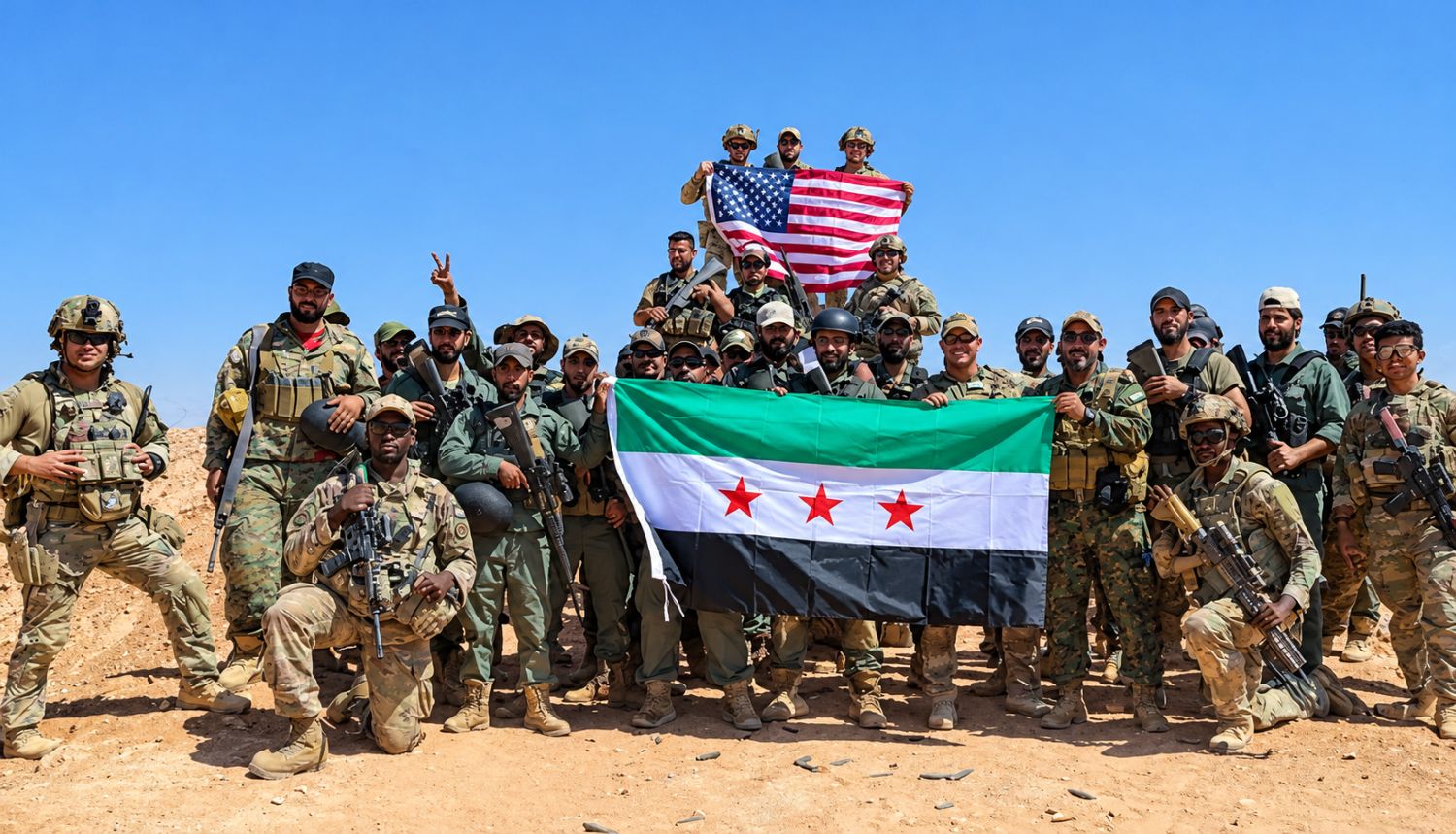
As Syria seeks to move beyond years of war and restore stability, security cooperation with the United States stands out as one important factor in addressing the challenges that continue to threaten the country, foremost among them the activity of ISIS cells and repeated incidents affecting energy facilities.
With Washington announcing the end of the Operation Inherent Resolve mission in Iraq while the mission continues in Syria, attention is turning to the nature of the next phase and whether U.S.–Syrian security cooperation will help strengthen the capabilities of security institutions, particularly amid the growing need to protect vital facilities and prevent the group’s resurgence.
The Mission Continues Despite Military Changes
On September 30, 2026, U.S. Central Command announced the end of the Operation Inherent Resolve mission in Iraq, following the departure of U.S. forces and equipment from the Erbil base and the relocation of the Combined Joint Task Force headquarters to Jordan.
This development, however, did not include ending the mission in Syria. CENTCOM affirmed that counter-ISIS operations would continue in cooperation with the Syrian government and international coalition partners, as part of efforts to prevent the group from resuming its activities.
The decision reflects a shift in the structure of U.S. command and military deployments in the region, without signaling an end to counterterrorism operations inside Syria.
Nevertheless, continuation of the mission does not necessarily mean that Washington has committed to maintaining a specific number of troops or providing new military assistance. Clear announcements would be needed to establish the nature of cooperation in the next phase.
International Pledges to Combat ISIS and Support Stability
On October 1, Rome hosted a meeting of the Global Coalition to Defeat ISIS, co-chaired by the United States and Italy, to discuss ways to strengthen Iraq’s and Syria’s capabilities to confront the group and support stability.
According to the joint U.S.–Italian statement, participants announced financial pledges exceeding $75 million to support counterterrorism needs in Syria, strengthen detention capacity, maintain health and sanitation services, and assist displaced people and detainees in Syria and Iraq.
These pledges are significant in light of the challenges facing Syrian institutions, but they do not mean that the funds have already been disbursed or that they were allocated in full to the Syrian government or its military institutions.
Developing security cooperation could also create opportunities for intelligence sharing, training, technical assistance, and operational coordination. However, the announcement that the mission will continue is not, by itself, evidence that new programs in these areas have been implemented.
Energy Facilities Under Pressure
Alongside these developments, Syria has experienced repeated incidents in recent weeks affecting gas pipelines and petroleum-product infrastructure, once again drawing attention to the vulnerability of the country’s energy infrastructure.
On September 28, the gas pipeline between al-Shoula and Deir ez-Zor was sabotaged, interrupting the flow of gas from the Jbessa plant to power-generation stations. The Syrian Petroleum Company later announced that the damaged section had been repaired and that the pipeline had returned to service on October 2.
On September 30, an explosion on a gas pipeline near the Tishreen thermal power plant temporarily put the Tishreen, Deir Ali, and Nasiriyah power stations out of service, prompting warnings that electricity rationing hours could increase because of reduced generation capacity.
The cause of the explosion had not been determined in the initial official announcement, making it inaccurate to describe it as a terrorist attack before investigative findings establish that conclusion.
On October 15, the Syrian Petroleum Company announced that an explosion on the Jbessa gas-export pipeline in the Hasakah countryside had caused a fire. Separately, a petroleum-products pipeline between Baniyas and Homs was damaged in an incident the company described as sabotage intended to steal fuel.
These incidents demonstrate that energy security is directly connected to economic stability and the continuity of essential services. Interruptions to gas and electricity supplies not only affect residents’ daily lives but also make it more difficult to restart productive sectors and attract investment.
Operations Against ISIS With No Proven Link to Energy Incidents
On the security front, Syrian authorities announced in October that they had dismantled an ISIS-linked cell in the al-Houla area of the Homs countryside and thwarted a plot to target a police patrol in the Damascus countryside. The authorities said the operations resulted in the detention of suspects and the seizure of explosive materials.
These announcements underscore continuing concerns about ISIS cell activity, but they do not provide evidence that the group was responsible for the incidents affecting energy facilities.
Distinguishing between operations officially attributed to ISIS and explosions for which responsibility remains unknown is essential to assessing security threats and avoiding the attribution of incidents to the group before investigations have reached conclusions.
Why Does This Matter to the U.S. Congress?
For Washington, continuation of the mission in Syria is tied to preventing ISIS’s resurgence, protecting U.S. forces and partners, and preserving regional stability.
For the U.S. Congress, key questions concern the effectiveness of security cooperation, the amount of support actually provided, the entities receiving it, and the mechanisms for overseeing international funding and pledges.
Monitoring the results of security operations, the level of coordination with Syrian institutions, and their ability to protect civilians and vital facilities could provide clearer indicators of this policy’s effectiveness.
Ultimately, the fight against ISIS cannot be separated from efforts to stabilize and rebuild Syria. Continuation of the U.S. mission may provide an opportunity to strengthen cooperation and build capacity, but its success will depend on results on the ground and on the ability of Syrian institutions to confront threats and protect infrastructure, rather than on statements and pledges alone.
Prepared by: Rana Hawa | Washington – Syria Morse News Network