
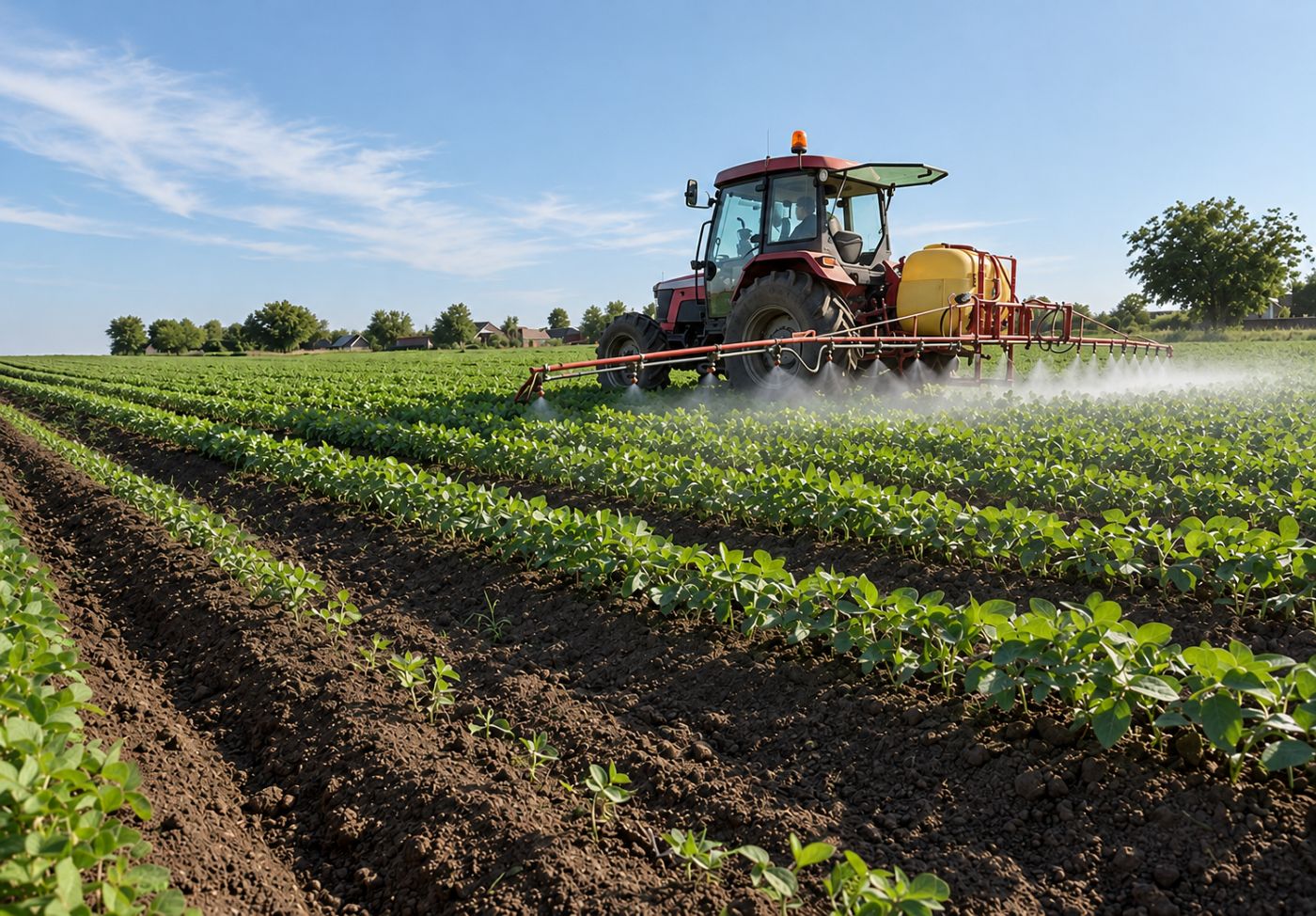
As Syria’s winter grain planting season approaches, the agricultural sector’s needs for fertilizers, tractors, combine harvesters, and irrigation systems are emerging as potential commercial opportunities for U.S. companies, while purchasing power, financing difficulties, and foreign competition continue to determine whether these needs can translate into actual deals.
These opportunities follow the easing of U.S. trade restrictions on Syria, opening the door for American suppliers to examine a market that needs to upgrade its equipment and agricultural inputs but faces accumulated economic and logistical challenges.
Agricultural Recovery and Continuing Needs
According to estimates issued by the Food and Agriculture Organization of the United Nations (FAO) on August 28, 2026, Syria’s wheat production is expected to reach about 2.7 million metric tons, while the country will still need to import nearly 2 million metric tons during the 2026–2027 marketing year.
Despite the expected improvement in production, Syrian agriculture continues to face shortages of inputs and high operating costs, alongside challenges involving water, energy, and equipment maintenance.
Needs vary by season: farmers require seeds, fertilizers, and irrigation equipment during planting and growth, while demand for combine harvesters, transport, and storage increases during the harvest season.
Fertilizer Plants: Disrupted Production and Imports
The situation of the General Fertilizers Company in Homs illustrates some of the challenges facing domestic production. In a statement published by Al-Sada newspaper on May 19, 2026, the company’s director-general, engineer Mustafa Abdullah Ali, confirmed that production had stopped because of shortages of natural gas and raw sulfur, noting that the Ministry of Energy had been contacted to secure the materials needed to resume operations.
Earlier statements by company management had described the restart of some production lines for limited periods, indicating that domestic industrial capacity exists but faces difficulties sustaining operations. Sufficient recent data were not available to determine the status of all plants as of October 2026.
On August 6, 2026, FAO issued a tender to purchase 3,500 metric tons of urea fertilizer and 2,100 metric tons of triple superphosphate fertilizer for Syria, totaling 5,600 metric tons. These quantities represent a specific procurement need, not total national demand or evidence that a contract was executed.
Imports and Competition in the Syrian Market
Data from the World Bank’s WITS database show that Turkish fertilizer exports to Syria were valued at about $34.47 million in 2025, compared with $11.11 million from the European Union.
In the urea category specifically, Turkey recorded exports to Syria of 48,808 metric tons worth $17.44 million in the same year.
These figures reflect actual trade and existing suppliers, but they do not represent a comprehensive tally of Syrian imports.
In equipment, 2024 data indicate that China exported 1,190 units to Syria under the customs category for tractors, valued at $6.62 million, compared with 269 units from Turkey worth approximately $517,000. This customs category includes different types of tractors and is not necessarily limited to agricultural use.
U.S. Opportunities Depend on Financing and Competitiveness
Potential opportunities for U.S. companies may include supplying tractors, combine harvesters, spare parts, modern irrigation systems, soil-testing and storage equipment, and certain agricultural inputs and services.
In July 2026, FAO issued a tender to supply five small combine harvesters and four six-row seed drills to Aleppo Governorate, indicating specific institutional procurement of equipment.
However, these tenders do not establish the nationwide scale of shortages, as no recent, unified count was available of tractors and combine harvesters that are out of service or require replacement.
U.S. products also face competition from suppliers located closer to Syria, making prices, shipping, maintenance, and the availability of spare parts decisive factors in their commercial prospects.
Trade Restrictions and U.S. Interests
According to the Bureau of Industry and Security (BIS) at the U.S. Department of Commerce, certain civilian goods classified as EAR99 may generally be exported to Syria using license exception SPP, subject to conditions concerning product classification and end users.
However, easing restrictions does not eliminate banking obstacles. A U.S. Department of Agriculture report issued on March 19, 2026, noted continuing payment and financing difficulties in agricultural trade with Syria.
The Export-Import Bank of the United States (EXIM) Country Limitation Schedule issued on July 30, 2026, shows that the bank’s support is unavailable for commercial transactions with Syria in either the public or private sector. This adds a challenge to financing U.S. exports without ruling out other commercial financing channels.
For the U.S. Congress, this issue provides a basis for assessing opportunities to expand U.S. exports and the impact of trade policy on civilian transactions, while accounting for compliance requirements and competition.
Ultimately, Syria’s agricultural needs present potential opportunities for U.S. companies, but turning them into actual sales requires funded demand, competitive prices, payment channels, and reliable maintenance services. Between agricultural needs and the ability to purchase lies the real commercial opportunity in the Syrian market.