After years of war, Syrian hospitals continue to face difficulties obtaining medical equipment and keeping it operational. Acquiring a new device does not necessarily mean that a hospital can use it. Equipment may become inoperable because of a minor malfunction or a missing spare part, while repairs may be impossible due to a lack of technical support or difficulties communicating with the manufacturer.
This problem is evident at Ibn al-Nafis Hospital in Damascus. In a report published by the Syrian newspaper Al-Thawra on November 15, 2026, hospital director Dr. Aiham Sawwan said that the hospital’s CT scanner had been out of service since mid-July. The report also identified problems with the mammography machine, noting that the number of images taken had been reduced to preserve the equipment. Dr. Sawwan stated that restoring the CT scanner to service was among the hospital’s priorities. The report did not establish the causes of these malfunctions, making it impossible to directly attribute them to U.S. sanctions or export restrictions.
The problem extends beyond diagnostic imaging equipment. A study published in Kidney360 in 2025 examined dialysis services across 116 facilities in Syria. Researchers found that only 36% of the facilities surveyed had adequate water treatment systems, an essential requirement for dialysis. The study also found that only 42% of the machines assessed were in good condition. It identified additional problems involving the physical condition of some facilities and shortages of medical supplies and essential medications, particularly in public facilities. These findings reflect conditions during the study period and do not constitute an updated assessment of all dialysis facilities in Syria.
To understand whether changes in U.S. policy have helped improve access to medical equipment, I contacted Dr. Zaher Sahloul, Chief Executive Officer of MedGlobal, an organization that has worked in Syria since 2017, supporting hospitals, healthcare centers, and dialysis services in cooperation with local partners.
In his responses to my questions, Dr. Sahloul explained that remaining U.S. export controls continue to create difficulties for certain transactions, particularly those involving equipment or components listed on the U.S. Commerce Control List. However, he also emphasized that MedGlobal had not documented specific cases involving rejected U.S. export licenses or prolonged approval delays by the U.S. Bureau of Industry and Security (BIS) for shipments of CT scanners, MRI machines, or dialysis equipment under its programs.
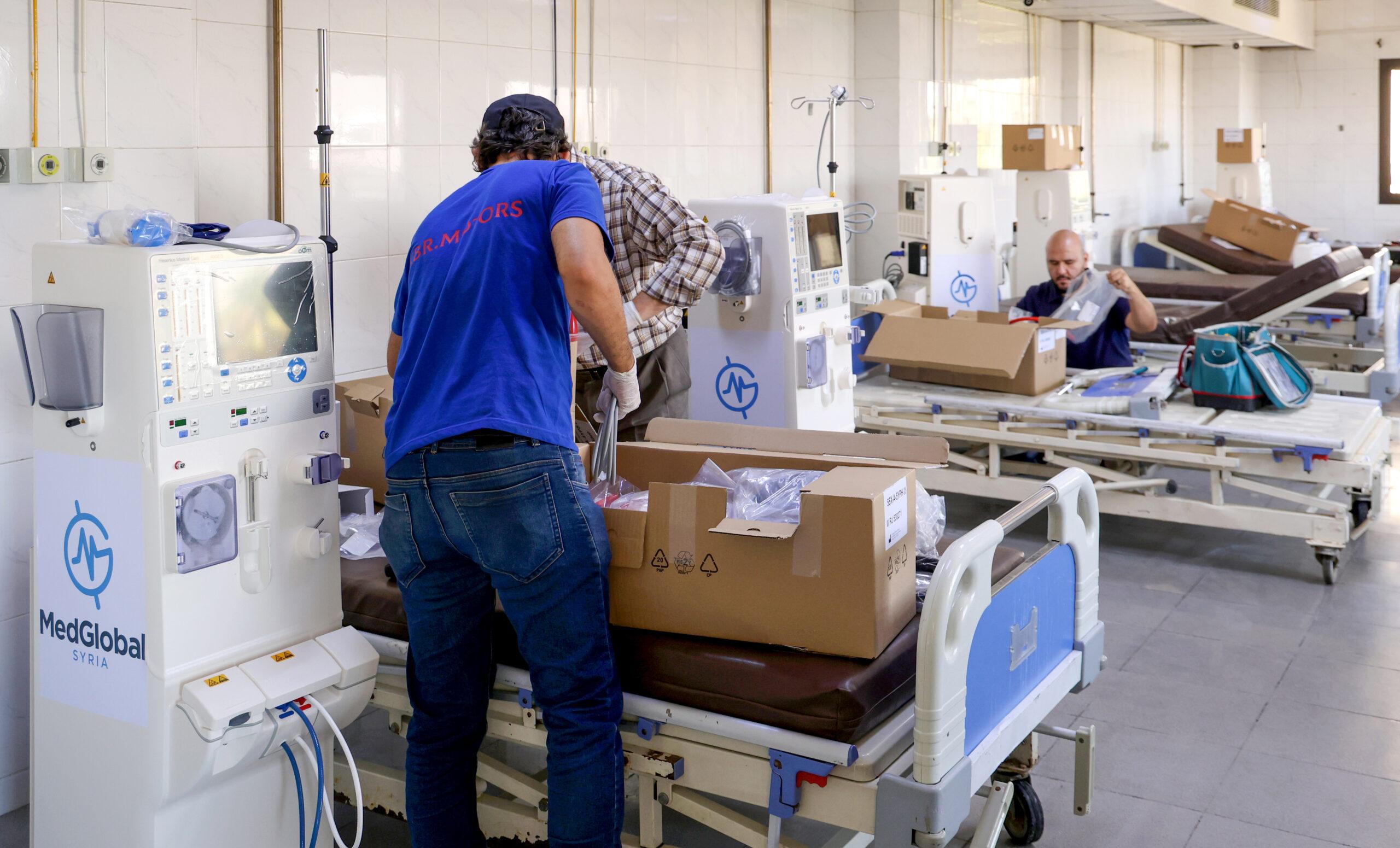
Dr. Sahloul noted that, during 2025 and 2026, MedGlobal coordinated the delivery of dialysis machines and medical consumables to hospitals in Damascus, Aleppo, and other areas, in cooperation with the Ministry of Health and local partners. He indicated that U.S. regulatory easing had helped make certain procurement and delivery operations more feasible.
According to Dr. Sahloul, however, export controls are not the only obstacle. Other difficulties include financing and banking transfers, high shipping and insurance costs, shortages of spare parts, and limited access to maintenance and technical support from manufacturers. Some companies and banks also prefer to avoid transactions involving Syria out of concern about potential compliance violations, even when the applicable regulations permit those transactions. This practice is commonly known as overcompliance.
At the U.S. regulatory level, significant changes have been introduced to the rules governing exports to Syria. On September 2, 2025, the Bureau of Industry and Security introduced amendments establishing License Exception Syria Peace and Prosperity (SPP), which permits the export of most items classified as EAR99 to Syria without an individual export license, subject to specific conditions. However, the exception does not cover all goods. Equipment listed on the Commerce Control List (CCL) may still require a license unless another applicable exception is available.
The amendments also introduced facilitation measures for certain civilian and commercial uses, with the possibility of approving specific license applications depending on the nature of the goods, the recipient, and the intended end use. Certain exceptions also apply to equipment servicing and the replacement of parts, including those under License Exception RPL, subject to applicable conditions. Therefore, it would be inaccurate to suggest that all medical devices are automatically authorized for export or, conversely, that they are prohibited simply because they contain U.S.-origin components. The applicable requirements depend on the technical classification of the equipment and its components, as well as the intended end user.
In a separate development, the United States rescinded Syria’s designation as a State Sponsor of Terrorism effective August 24, 2026, with the official notice published in the Federal Register on August 31. However, removing this designation did not eliminate all export controls. Syria remains listed in Country Group E:1 under the U.S. Export Administration Regulations.
MedGlobal’s responses illustrate that U.S. regulatory easing has facilitated some medical-equipment deliveries but has not resolved all the challenges facing Syria’s healthcare sector. Hospitals require more than the physical arrival of equipment. They also need reliable access to spare parts, sustainable financing, regular maintenance, trained technicians, electricity, and infrastructure capable of supporting medical operations.
Together, these factors determine whether a medical device can provide essential services to patients or remain out of operation inside a hospital.