

Syria has begun taking verifiable steps to dismantle remnants of the chemical weapons program inherited from the Bashar al-Assad era, in cooperation with the Organisation for the Prohibition of Chemical Weapons (OPCW). These steps include the destruction of Category 3 chemical weapons and the disclosure of previously undeclared sites, materials, and facilities. The current progress represents an important shift toward transparency and compliance, but it does not mean the file is closed; efforts to determine the full scope of the former program, verify destruction, preserve evidence, and hold those responsible for chemical weapons use accountable remain ongoing.
Syria has begun destroying remnants of the chemical weapons program inherited from the Bashar al-Assad era. The significance of the step lies not in the number of munitions removed, but in the manner in which the process is being conducted—from the disclosure of previously undeclared chemical materials and sites, to access for international inspectors and verifiable destruction, alongside efforts to hold those responsible for the use of these weapons accountable. The central question is whether Syria’s new state institutions can transform a file long associated with concealment and noncompliance into an institutional process based on transparency and international law.
What Have Inspectors Verified?
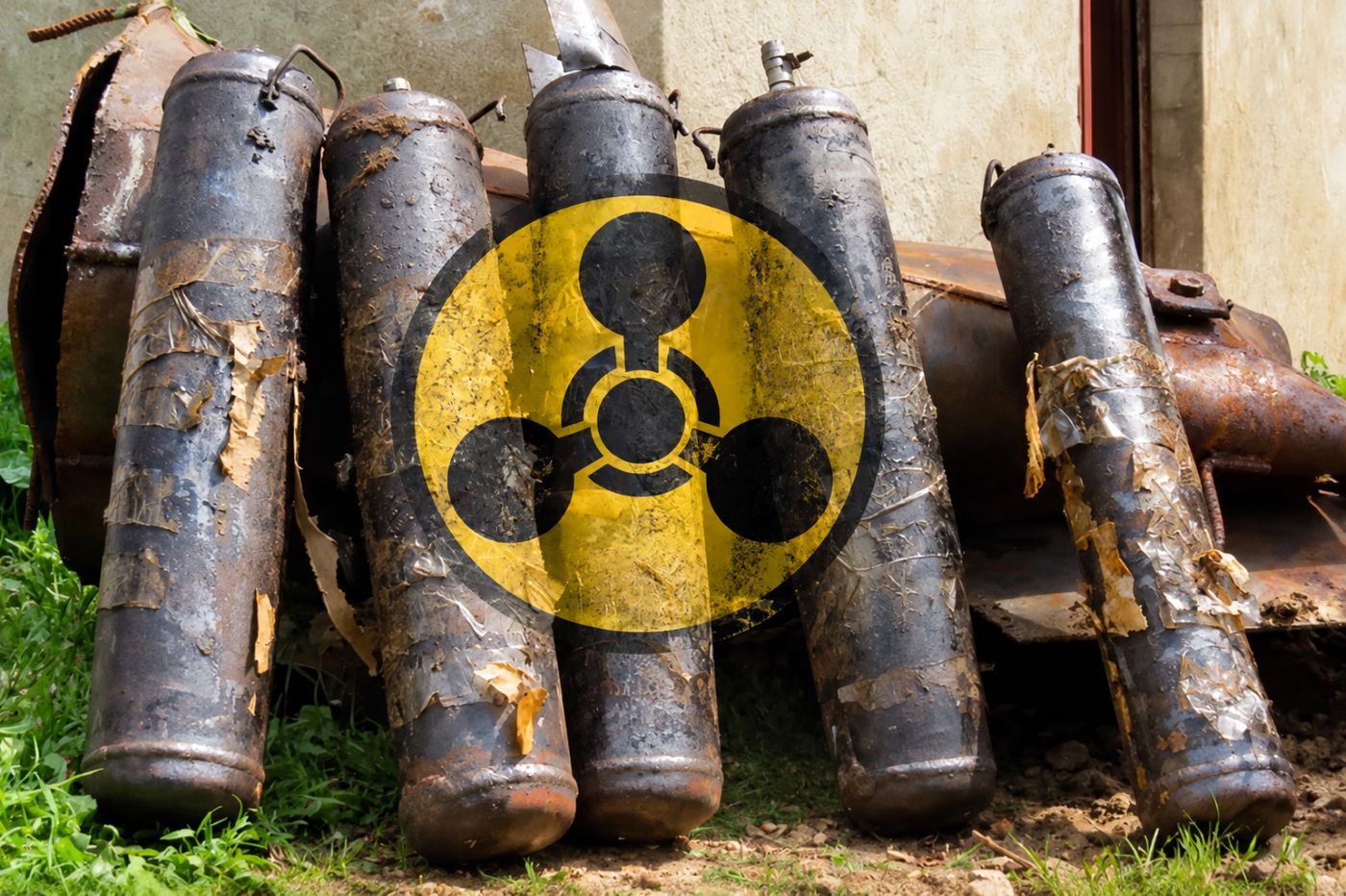
On September 3, Reuters reported that Syria had begun destroying remnants of the secret chemical weapons program discovered in the country in May. During a briefing to the U.N. Security Council, U.N. Under-Secretary-General and High Representative for Disarmament Affairs Izumi Nakamitsu said that, for the first time since 2014, the OPCW had verified the destruction of chemical weapons in Syria. This included 42 aerial bombs whose irreversible destruction was verified by the organization during an August mission.
According to Reuters, the operation involved Category 3 chemical weapons—unfilled munitions and equipment associated with the delivery of chemical agents—not 42 bombs filled with chemical agents. What inspectors verified, therefore, was the destruction of specific munitions and equipment, not proof that all chemical materials or agents that may remain from the former program had been eliminated.
Discoveries Expand the Scope of the Mission
The discovery of these remnants in May marked a turning point in the file, demonstrating that the task of destruction cannot be separated from the task of disclosure. In an official statement dated May 27, the OPCW said a team of experts had been deployed in Syria since the beginning of the month to assist in preparing a complete and accurate inventory of the remnants of the chemical weapons program inherited from the Assad era.
The organization said that more than 100 sites across the country were considered potentially connected to the program and that the team had focused on a number of priority locations within the Hama-Homs-Latakia triangle.
According to the same OPCW statement, the mission discovered dozens of previously undeclared chemical munitions, including aerial bombs of the same type used in the March 2017 attacks in Latamneh and the April 2017 attack in Khan Shaykhun. The organization also reported finding rockets associated with the type used in the Ghouta attack, along with chemicals, equipment, and thousands of pages of documentation.
The discoveries did not end with what the mission itself found. Syrian authorities subsequently declared to the OPCW an additional chemical weapons production facility, a newly discovered chemical used in the production of nerve agents, empty chemical munitions, and two chemical weapons storage facilities, according to Reuters’ reporting on the September 3 U.N. briefing.
These findings make it difficult to regard the current destruction process as the conclusion of the file. Before complete and verified elimination can be established, the remaining sites and materials must be identified, samples and documents analyzed, official declarations reviewed, and destruction operations subjected to independent verification.
From a Change in Rhetoric to a Test of Institutions
The background to the crisis is that, according to the OPCW, the former Syrian government did not declare the full scope of its chemical weapons program and sought to mislead the organization and the international community about its extent. Current cooperation with the OPCW therefore means, in practical terms, allowing access to sites, conducting interviews, collecting samples and documents, securing materials and facilities, and implementing destruction plans that can be independently verified. Syria joined the Chemical Weapons Convention in 2013 and submitted an initial declaration of its program, but the OPCW continued to record unresolved issues concerning the accuracy and completeness of that declaration.
On June 30, the Syrian Arab News Agency reported that a Syrian delegation comprising representatives of several ministries and national bodies participated in a training course hosted by the OPCW in The Hague. The program was intended to strengthen Syrian officials’ understanding of the Chemical Weapons Convention and its implementation requirements and to facilitate the exchange of expertise with the organization and member states, helping align the work of Syrian national institutions with the convention.
On July 9, meanwhile, the OPCW said its Executive Council had decided by consensus to restore Syria’s rights and privileges, which had been suspended since 2021. The decision did not amount to a declaration of full compliance. Rather, it followed documented progress that included amendments to the initial declaration, preparation of facility agreements, facilitation of verification activities, and development of destruction plans. The council also approved a detailed plan for verifying the destruction of Category 3 chemical weapons at Qutayfah and two verification agreements covering storage facilities in Qutayfah and Homs.
On September 3, the Syrian Arab News Agency reported that Syria’s Permanent Representative to the United Nations, Ibrahim Olabi, told the Security Council that the destruction of some of the chemical materials discovered in Syria had begun under the verification procedures of the OPCW Technical Secretariat. He described it as a “historic moment,” saying it was the first destruction operation since Syria’s liberation from the former regime and the first destruction of chemical munitions on Syrian territory since 2014. He argued that a file that had for years posed a danger to Syrians and the wider world could be transformed into a model of diplomacy combined with genuine political will and international cooperation.
Syria’s Permanent Representative also warned that success in this mission, as well as in dealing with nuclear materials and other unprecedented measures, would be impossible while Syria faces actions that threaten its stability and that of the broader region. He said repeated Israeli attacks had obstructed search and destruction operations, at times bringing them to a complete halt, while placing Syrian teams, OPCW personnel, and secured sites at risk.
Olabi said details of the progress achieved were available in reports by the Syrian government and the OPCW. He also emphasized that Syria’s position on justice and accountability was firm and non-negotiable and that the country was continuing to build international partnerships in support of national justice processes.
The significance of these developments is that cooperation is no longer measured solely by political statements, but by observable actions: access to sites, accurate provision and protection of information and documentation, and implementation of destruction plans under OPCW oversight.
Disarmament Does Not Eliminate the Need for Accountability
The criminal-accountability track remains parallel to efforts to remove the physical threat. Reuters reported that Syrian authorities had detained 18 suspects earlier this year over alleged roles in the former regime’s chemical weapons program, including military, political, and technical officials, and that authorities were preparing for the first court hearing in the case.
On January 22, the OPCW released the findings of the fifth report by its Investigation and Identification Team, saying it had reasonable grounds to believe that the Syrian Arab Air Force was responsible for a chemical attack in the town of Kafr Zita in Hama Governorate on October 1, 2016. The organization said the new Syrian authorities cooperated with the investigation for the first time, providing full access to the town as well as relevant information and documents.
On September 3, U.S. Deputy Representative to the United Nations Tammy Bruce welcomed Syria’s progress and noted U.S. participation in the decision to restore Syria’s rights within the OPCW, while calling for continued technical support and assistance to Syria in bringing those responsible for the use of chemical weapons to justice.
Policy Relevance
The destruction of chemical munitions under OPCW supervision, combined with the disclosure of previously undeclared sites and materials, indicates a change in how Syrian state institutions are approaching a file that was disputed for years over transparency and compliance.
For congressional review, key indicators include continued inspector access to relevant sites, completion of the inventory and verification of undeclared materials and facilities, implementation of verifiable destruction operations, preservation of evidence, and progress in judicial accountability for the previous use of chemical weapons.
The real test, therefore, will not be the destruction of 42 munitions alone, but the ability of Syrian institutions to continue disclosure, verification, and destruction while preserving evidence and opening the way for credible accountability. Removing the physical threat, establishing the full scope of the former program, and holding those responsible accountable are parallel processes; none can substitute for another. The current progress is significant, but it does not mean Syria’s chemical weapons file has been closed.
By Tony Bassmaji