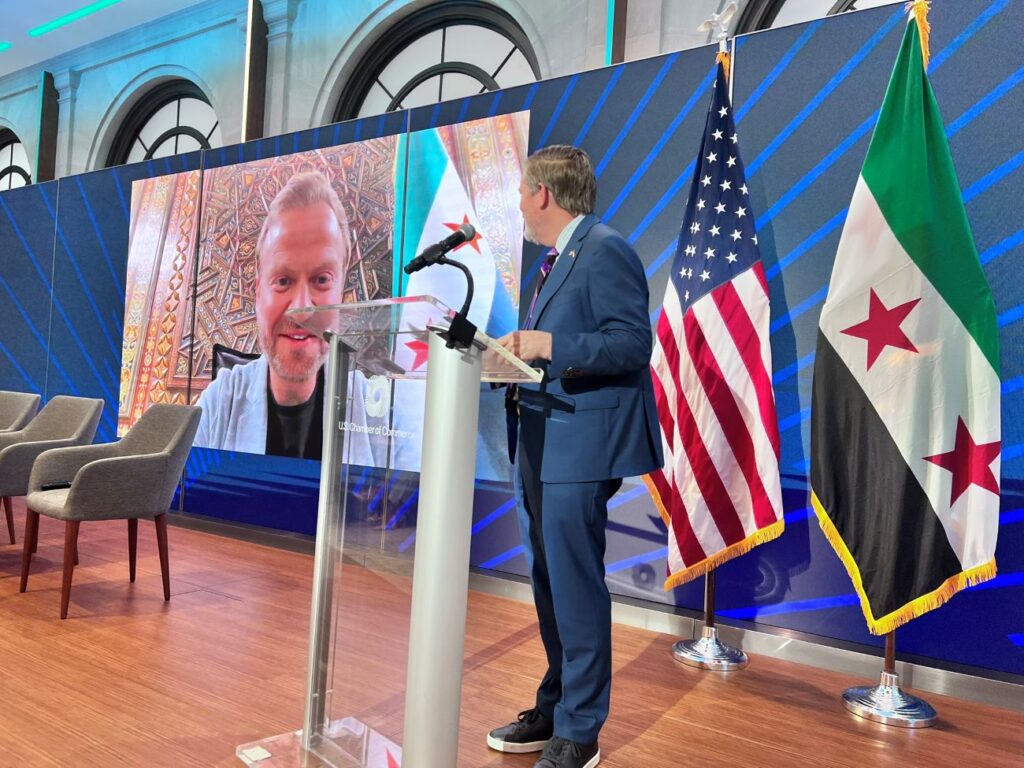
Washington, D.C. — The U.S. Chamber of Commerce in Washington, D.C., hosted a notable economic event focused on investment opportunities in Syria and potential pathways for American private-sector engagement at a time of growing discussion around Syria’s economic recovery and reconstruction.
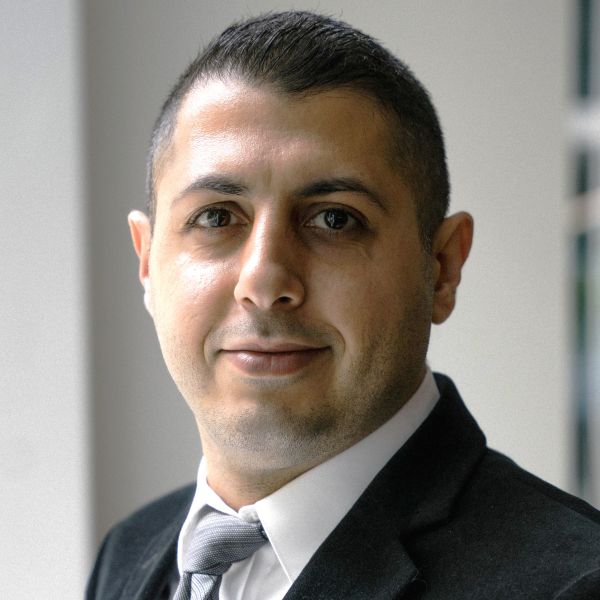
The event brought together representatives of the U.S. government, officials working on Middle East affairs at the U.S. Department of State, members of Congress, representatives of the Syrian government, including the Assistant Minister of Energy, and Mr. Mohammad Qanatri, Chargé d’Affaires of the Embassy of the Syrian Arab Republic in Washington.
The event was held as part of the launch of “Investor Guides for Syria: Pathways for U.S. Private Sector Engagement,” organized by the U.S. Chamber of Commerce under the U.S.-Syria Business Initiative. The discussion focused on available investment opportunities, prospects for economic cooperation, and promising sectors within the Syrian market.
Syrian Participation and a Clear Economic Message
From Damascus to Washington, the President of the Syrian Investment Authority, Engineer Talal Al-Hilali, joined the event virtually and presented to American investors an overview of growth opportunities, incentives, and expected investment returns in Syria.
During the session, Al-Hilali highlighted legislative reforms affecting Syria’s investment climate, particularly the new Investment Law, Decree No. 114, and the incentives, exemptions, and guarantees it provides. He noted that these measures could strengthen the competitiveness of projects and improve their economic feasibility.
Al-Hilali emphasized that Syria possesses strong investment advantages and promising opportunities across various economic sectors and governorates. He invited American and international companies to explore the Syrian market and benefit from available opportunities. He also noted that early investment in Syria could offer investors significant growth potential and exceptional returns in the coming years.
A Notable U.S. Tone Despite the Continuing SST Designation
One of the most notable aspects of the event was the serious and open tone of the discussion regarding economic opportunities in Syria, despite Syria’s continued designation by the U.S. Department of State as a State Sponsor of Terrorism.
While this designation remains one of the key unresolved obstacles to broader economic engagement, the convening of this type of discussion in Washington, with participation from official and business circles, represents an important indicator of a growing space for practical thinking about the future of economic relations with Syria.
The direct presentation of investment opportunities to the American private sector also reflects increasing attention to a potential post-restrictions phase, as well as to mechanisms that could support economic stability and reconstruction when the appropriate legal and political conditions are in place.
A Call for Investors to Explore Syria’s Opportunities
In his remarks, Mr. Mohammad Qanatri, Chargé d’Affaires of the Embassy of the Syrian Arab Republic in Washington, delivered a notable message urging investors to seriously consider the significant potential that exists in Syria. He emphasized that the country offers broad and underutilized opportunities across multiple sectors.
The Syrian messages during the event stressed that Syria is entering a stage that requires meaningful economic partnerships, responsible international engagement, and investments capable of contributing to development, job creation, and economic recovery.
Another Step in Building Trust
The event was not merely an economic conference. It appeared to be another step in a longer process that requires quiet work, sustained communication, and confidence-building among all sides.
Syria’s economic future is becoming increasingly present in serious discussions in Washington, not only from the perspective of reconstruction, but also through the lens of opportunity, stability, and responsible private-sector engagement.
Amid ongoing political and legal challenges, including the State Sponsor of Terrorism designation, such meetings may play an important role in preparing the conditions for future positive steps and opening wider prospects for investment and development that the Syrian people need.
The U.S. Chamber of Commerce event on investor guides for Syria reflects an important shift in the nature of the economic conversation around Syria in Washington. Although restrictions and challenges remain, the presence of American and Syrian officials, private-sector participation, and the direct presentation of investment opportunities all indicate that Syria’s economic file is beginning to receive more serious attention within policy and business circles.
The hope remains that such meetings will contribute to a practical and gradual path toward addressing existing obstacles, strengthening investment opportunities, and opening a new economic chapter that supports stability, reconstruction, and development in Syria.
Sign in to react or comment.